How to Import Furniture from Indonesia: A Buyer’s Step-by-Step Guide
As an international wholesale buyer, sourcing furniture from Indonesia can be a strategic move to enhance your product offerings. Indonesia is renowned for its rich variety of materials, including solid teak, mahogany, and rattan, crafted by skilled artisans. Understanding the end-to-end import process, from selecting the right supplier to ensuring compliance with international regulations, is essential for a successful venture. This guide provides an in-depth walkthrough to help you navigate the complexities of importing Indonesian furniture, ensuring a smooth integration into your supply chain.
Finding a Reliable Supplier

The first step in importing furniture from Indonesia is to identify a reputable supplier. Look for manufacturers with a proven track record in export markets like the US, EU, and Australia. Jepara, Central Java, is a historic hub for teak and carved furniture, while Bali specializes in design-led contemporary pieces. Verify the supplier’s capability to meet your specifications, whether it’s OEM or ODM production, and request pre-production samples. Ensure they offer private-label options if branding is critical for your business. Confirm the supplier’s adherence to SVLK certification, which guarantees the legality of the timber used, aligning with the EU Deforestation Regulation and US Lacey Act. For further assurance, check if they offer additional certifications like FSC for sustainability.
Evaluating Samples and Quality
Before committing to a large order, request samples to assess the quality of materials and craftsmanship. Indonesia offers a wide range of materials, including solid teak from Jepara, mahogany, and various types of rattan. Examine the finish, durability, and design to ensure they align with your market’s standards. Samples also allow you to evaluate the factory’s ability to meet your custom specifications, such as unique finishes or specific dimensions. A thorough evaluation of samples helps mitigate risks and ensures that the final product meets your expectations. This step is crucial for maintaining quality control and establishing a reliable supply chain.
Material Grades and Finishing Options
Understanding the different material grades and finishing options is crucial for tailoring your product offerings to your market. Indonesian furniture is often crafted from various grades of teak and mahogany, each with its own characteristics and price points. Grade A teak, for instance, is known for its uniform color and minimal knots, making it ideal for high-end markets. Meanwhile, Grade B and C teak, which may contain more variations and imperfections, can be more cost-effective for budget-conscious consumers. In terms of finishing, options range from natural, oil, lacquer, to distressed finishes, allowing you to cater to diverse aesthetic preferences. Collaborate with your supplier to choose the right combination of materials and finishes that align with your brand’s vision and target market.
Managing Deposits and Payment Terms
Once satisfied with the samples, negotiate payment terms with your supplier. Typically, a deposit of approximately 30-50% by T/T (bank transfer) is required to start production. The balance is usually paid against a copy of the Bill of Lading (B/L). These terms are generally negotiable, especially for repeat buyers. Ensure that all financial transactions are transparent and documented to avoid misunderstandings. Establishing clear payment terms is vital for maintaining a smooth business relationship and ensuring timely production and delivery of your orders.
Understanding SVLK Certification
The SVLK (Sistem Verifikasi Legalitas Kayu) is Indonesia’s mandatory timber legality assurance system, ensuring that all wood products are legally harvested and traceable. Every export consignment must ship with a V-Legal Document, providing strong evidence of legality for due diligence under international regulations like the EU Deforestation Regulation and the US Lacey Act. While SVLK is not equivalent to FSC, some factories may offer FSC certification as an additional sustainability measure. For more details on SVLK certification, visit silk.menlhk.go.id or our detailed guide on SVLK certification.
Quality Control and Inspection
Implementing a robust quality control process is essential to ensure that the furniture you import meets your standards and those of your market. Engage with third-party inspection services to verify the quality and conformity of the products before shipment. These inspections can cover various aspects, such as material quality, craftsmanship, dimensions, and finishing. Regular quality checks during and after production can prevent potential issues, reduce returns, and enhance customer satisfaction. Additionally, maintaining open communication with your supplier about quality expectations can foster a collaborative approach to quality assurance.
FOB Loading and Incoterms
In Indonesian furniture exports, FOB (Free on Board) is the most common Incoterm. The seller handles export clearance and loading at the Indonesian port, while the buyer is responsible for booking sea freight and insurance. Main export seaports include Tanjung Perak in Surabaya, Tanjung Emas in Semarang, and Benoa in Bali. Ensure you understand the responsibilities associated with FOB, as well as other available terms like CFR/CNF and CIF. Familiarize yourself with the specific steps in the furniture export shipping process to ensure compliance and smooth transactions.
Packaging and Shipping
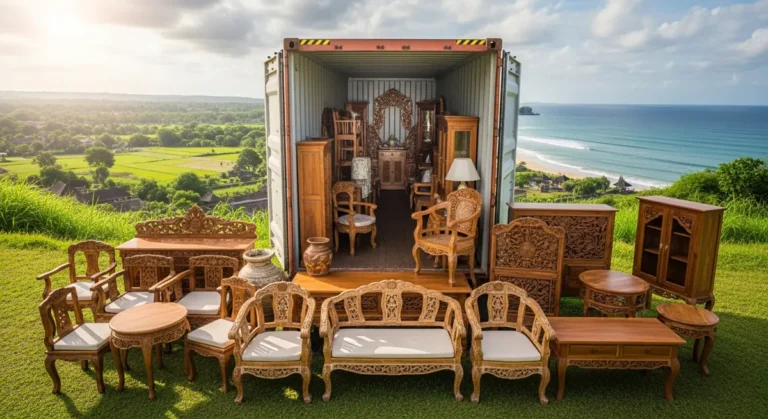
Proper packaging is crucial to protect your furniture during transit and ensure it arrives in excellent condition. Discuss packaging options with your supplier, such as carton boxes, wooden crates, or bubble wrap, depending on the product type and fragility. Consider eco-friendly packaging solutions to align with sustainable practices and appeal to environmentally-conscious consumers. Additionally, understanding the shipping process, including container loading plans and space optimization, can help reduce costs and improve efficiency. Collaborate with your logistics provider to ensure smooth coordination from factory to port, and ultimately, to your warehouse.
Customs at Destination
Once your furniture shipment leaves Indonesia, it’s crucial to prepare for customs clearance at the destination port. Each country has its own import regulations and duties, so consult with a local customs broker to ensure compliance. Proper documentation, including the V-Legal Document, is essential for a hassle-free customs process. Be aware of any additional certifications or inspections required by your country’s regulations. Accurate and thorough preparation will help you avoid delays and additional costs, ensuring a smooth transition from port to warehouse.
MOQ Tiers and Volume Discounts
Understanding Minimum Order Quantity (MOQ) tiers and negotiating volume discounts can significantly impact your cost structure and profitability. Suppliers often offer different pricing tiers based on order volume, with larger orders qualifying for more favorable rates. This approach not only helps in reducing per-unit costs but also strengthens your bargaining position with suppliers. Discuss potential volume discounts with your supplier to maximize your purchasing power and align order quantities with your sales forecasts. Effective negotiation and planning in this area can lead to substantial savings and enhance your competitive edge.
Lead Times and Logistics
Production lead times for Indonesian furniture typically range from 30-60 days, depending on the order size and finishing requirements. Sea freight transit to major markets like the US, EU, and Australia takes approximately 3-5 weeks, though this can vary by route and season. It’s advisable to confirm current schedules with your freight forwarder. Efficient logistics planning is crucial for meeting delivery deadlines and maintaining inventory levels. Understanding these timelines allows you to coordinate your supply chain effectively and manage customer expectations.
Requesting a Quote and Contacting Suppliers
To initiate your import process, request a detailed quote from potential suppliers. Prices are typically quoted based on material, grade, specification, finish, volume, and Incoterm. For tailored quotes and further inquiries, contact us via WhatsApp at +62 811-3941-4563 or email [email protected]. Visit our contact page for additional information. Establishing clear communication channels and confirming all details through a Request for Quote (RFQ) ensures a successful partnership and smooth transaction process.