Furniture Lead Times: Production + Sea Freight from Indonesia
As an international wholesale buyer, sourcing furniture from Indonesia offers not only exquisite craftsmanship but also a strategic advantage in terms of production and shipping timelines. Understanding these timelines is critical for effective planning and delivery to markets like the US, EU, Australia, and the Middle East. This guide provides a comprehensive overview of the key factors influencing furniture production lead time in Indonesia.
Understanding Indonesian Furniture Production Lead Time

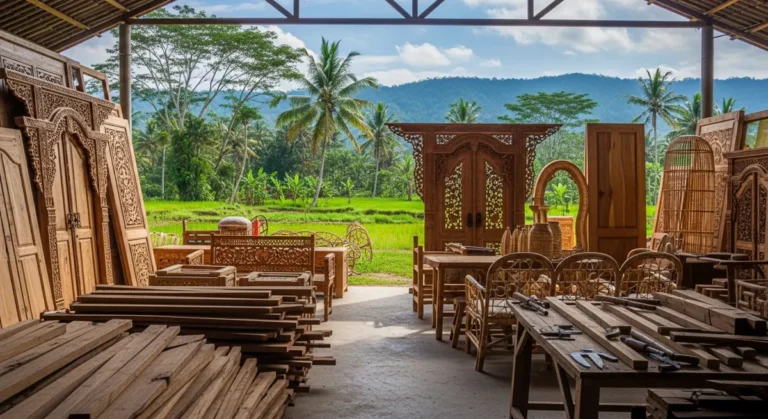
In Indonesia, furniture production lead times typically range from 30 to 60 days. This timeline can vary depending on the size of the order and the complexity of the finishing required. For example, a larger order of solid-wood furniture might necessitate more time due to the intricate craftsmanship involved, especially when using materials like teak or mahogany. The production process starts with a deposit of approximately 30-50% via T/T, which initiates the manufacturing phase. This is followed by the creation of pre-production samples for buyer approval, ensuring that the final product meets the specific requirements of the order. For more detailed insights on the production process, visit our shipping process page.
Shipping Timelines to Key Markets
Once production is complete, the shipping phase begins. Sea-freight transit times vary by destination: approximately 3-5 weeks to the US, EU, and Australia, while routes to the Middle East may be shorter due to geographical proximity. The main export seaports in Indonesia are Tanjung Perak in Surabaya, Tanjung Emas in Semarang, and Benoa in Bali, which are strategically located to facilitate efficient shipping operations. It is crucial for buyers to confirm current schedules as these can vary due to seasonal changes and route adjustments. For an in-depth understanding of Incoterms and their impact on shipping, explore our guide on FOB vs CIF Incoterms.
Container Loading Capacities and Considerations
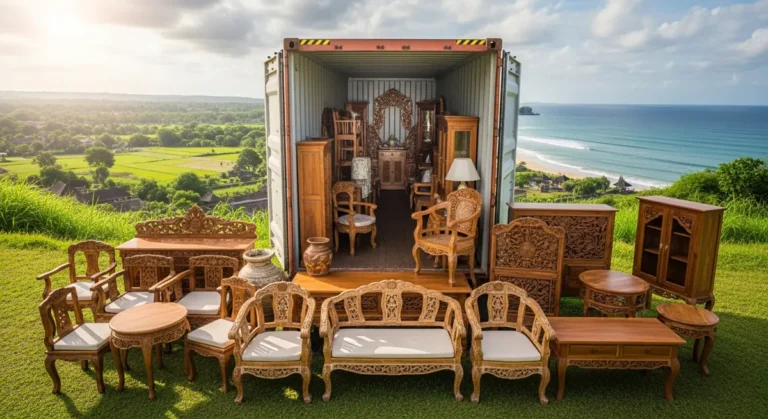
Understanding container capacities is vital for optimizing shipping efficiency. A standard 20ft container can accommodate approximately 28 CBM of furniture, while a 40ft container holds about 58 CBM. For larger orders, a 40ft High Cube (40HQ) offers a capacity of 68 CBM. The type of furniture also affects loading; bulky upholstered or woven pieces fill volume quickly, whereas dense knock-down items may reach weight limits first. Typically, the minimum order is one 20ft container, but mixed-model and mixed-material containers are common, provided each item meets its per-item MOQ. For more on quality control and inspection, refer to our inspection guide.
Minimum Order Quantities (MOQ) and Implications
Minimum order quantities are a key consideration in furniture sourcing. For solid-wood furniture, per-item MOQs range from 5-20 pieces, while woven or rattan items typically require 10-30 pieces per model or color. Meeting these MOQs ensures efficient production and cost management, as factories can streamline processes when orders meet these thresholds. Buyers should plan their orders to align with these requirements, which also facilitate the mixed-container practice prevalent in Indonesian exports. For specific MOQs and order customization, initiating a Request for Quote (RFQ) is recommended.
Indonesian Materials and Their Characteristics
Indonesia is renowned for its diverse range of materials used in furniture production, each with unique attributes. Common materials include:
- Solid Teak and Reclaimed/Recycled Teak (Jepara/Java)
- Mahogany
- Suar/Acacia (Live-edge)
- Natural Rattan and Synthetic/PE All-weather Rattan
- Water Hyacinth and Seagrass
- Genuine Leather
- Stone/Terrazzo Tops
Teak, particularly from Jepara, is celebrated for its durability and aesthetic appeal, making it a staple in high-quality furniture. For more on teak and its uses, visit Wikipedia. The choice of material impacts both the production lead time and the final product’s suitability for different markets.
Quality Control and Finishing Techniques
Quality control is a vital component in the production of Indonesian furniture, ensuring that each piece meets international standards and buyer specifications. Inspections typically occur at multiple stages, including raw material selection, in-process checks, and final product evaluation. The finishing process is equally crucial, involving sanding, staining, and coating to achieve the desired aesthetic and durability. Popular finishes include natural, distressed, and glossy, each providing a distinct look and feel. Custom finishes can also be accommodated, allowing buyers to tailor products to specific market preferences. For further information on quality assurance practices, refer to our inspection guide.
Packing and Packaging Standards
Proper packing and packaging are essential to protect furniture during transit and ensure it arrives in pristine condition. Indonesian furniture exporters utilize a variety of packing materials such as bubble wrap, foam, and corrugated cardboard to safeguard against damage. Custom crates or pallets may be used for larger or more delicate items. Packaging is often tailored to meet the requirements of the destination market, including specific labeling and documentation. Adopting robust packaging standards not only minimizes risk during shipping but also enhances customer satisfaction by delivering products intact.
Legal and Certification Requirements
The SVLK (Sistem Verifikasi Legalitas Kayu) is Indonesia’s mandatory Timber Legality Assurance System, ensuring that all timber used in furniture production is legally harvested and traceable. This certification is crucial for compliance with international regulations such as the EU Deforestation Regulation (EUDR) and the US Lacey Act. While SVLK provides a legality baseline, some factories also offer FSC certification for additional sustainability assurance. For more details on SVLK, visit the official site.
Pricing and Payment Terms
Pricing for Indonesian furniture exports is highly variable and depends on factors such as material, grade, specification, finish, volume, and the chosen Incoterm. Typically, a deposit of approximately 30-50% is required to commence production, with the balance payable against a copy of the Bill of Lading (B/L). These terms are often negotiable for repeat buyers. To get a precise quote tailored to specific needs, an RFQ is essential. For inquiries and RFQs, buyers can reach us via WhatsApp at +62 811-3941-4563 or email at [email protected].
For further assistance and to initiate a Request for Quote, please contact us today. Our team is ready to assist with your furniture sourcing needs and ensure a smooth procurement process.