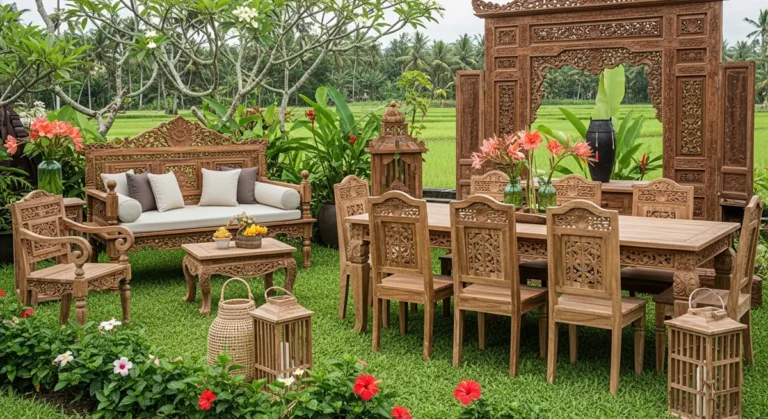
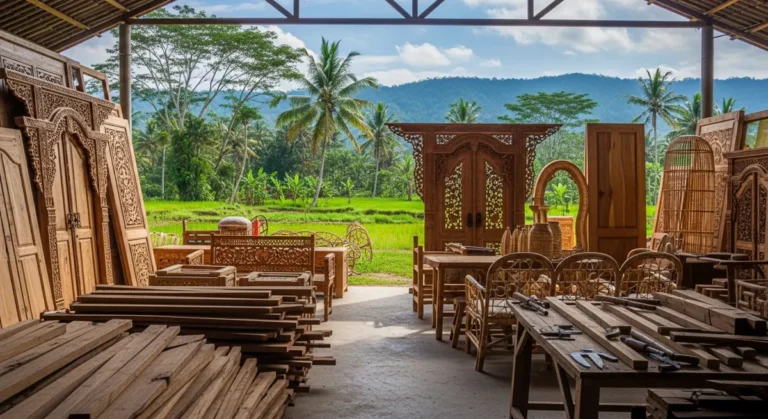
Importing Furniture to the USA from Indonesia
As a seasoned furniture export manager in Indonesia, I offer insights for international wholesale buyers looking to import furniture from Indonesia to the USA. Understanding crucial elements, such as SVLK certification, container capacities, and lead times, can streamline your sourcing process, ensuring compliance and efficiency. Here’s a comprehensive guide for importers, retailers, and procurement specialists.
Understanding SVLK Certification for Legal Timber

Indonesia’s SVLK (Sistem Verifikasi Legalitas Kayu) is a mandatory certification system ensuring all wood products are legally harvested and traceable. Every export consignment, whether furniture, woodworking, or plywood, must ship with a V-Legal Document. This document not only supports compliance with the EU Deforestation Regulation but also aids in fulfilling the US Lacey Act’s due diligence requirements. While SVLK provides strong legality evidence, importers must maintain their due-diligence duty. Unlike the optional FSC certification, SVLK is essential for legality, making it crucial for buyers to verify their suppliers’ credentials. For more details on SVLK, visit silk.menlhk.go.id or see our SVLK certification guide.
Container Capacities and Efficient Loading
Optimal container loading is vital for cost-effective shipping. A 20ft container holds approximately 28 CBM, while a 40ft container can accommodate about 58 CBM. For larger shipments, a 40ft High Cube (40HQ) offers around 68 CBM of usable space. Bulky items like upholstered or woven furniture often “cube out” before reaching weight limits, whereas dense, knock-down pieces may hit weight limits first. Mixed-model and mixed-material containers are standard, allowing flexibility as long as each item meets the per-item MOQ and the load meets the minimum CBM. For more on this, visit our shipping process guide.
Material Grades and Finishing Options
Indonesian furniture comes in various material grades, each affecting the final product’s quality and price. For instance, teak furniture is graded from A to C, with Grade A being the most durable and aesthetically pleasing, featuring a uniform grain and color. Similarly, mahogany and acacia wood are graded based on density and visual appeal. Understanding these grades helps buyers make informed decisions based on their target market and price point.
The finishing process is another critical aspect, offering a range of options from natural matte to glossy finishes. UV-coating, water-based finishes, and oil-based treatments are popular choices, each providing different levels of protection and aesthetic appeal. Buyers should discuss finishing preferences with suppliers to ensure the end product aligns with their market expectations. The choice of finish can significantly influence both the appearance and longevity of the furniture, making it an important consideration in the purchasing process.
Quality Control and Assurance
Maintaining high-quality standards is essential in the competitive furniture export market. Indonesian manufacturers typically implement rigorous quality control (QC) procedures to ensure each piece meets international standards. QC processes often include multiple inspections throughout production, covering aspects such as wood moisture content, joint stability, and finish consistency.
For buyers, understanding the QC protocols of their suppliers is crucial. Reputable exporters provide detailed QC reports and are open to third-party inspections. This transparency builds trust and ensures that the products delivered meet the agreed-upon specifications. Buyers are encouraged to visit production sites or engage third-party QC services to verify product quality before shipment. Such practices not only enhance product reliability but also strengthen long-term business relationships.
Packing and Shipping Standards
Packing plays a vital role in preserving the integrity of furniture during transit. Standard packing includes using corrugated boxes, bubble wrap, and wooden crates for added protection. Some exporters offer additional packing services such as vacuum sealing for moisture-sensitive items or custom branding for retail-ready products.
Understanding the packing standards used by your supplier can prevent damage and reduce the risk of returns. It is advisable to discuss specific packing requirements with your exporter to align with your distribution needs. Proper packing not only safeguards the product but also reflects professionalism and attention to detail, which can be crucial for maintaining customer satisfaction and brand reputation.
Incoterms and Export Ports in Indonesia
FOB is the most common Incoterm for Indonesian furniture exports. Under FOB, the seller handles export clearance and loading at the port, while the buyer arranges sea freight and insurance. Other terms like CFR/CNF and CIF are also available. Major furniture export seaports include Tanjung Perak in Surabaya, Tanjung Emas in Semarang, and Benoa in Bali. Each port offers strategic advantages based on proximity to production hubs and shipping routes. Understanding these terms is crucial for efficient logistics planning. Explore more about Incoterms in our lead-time and Incoterm guide.
Production and Lead-Time Planning
Production lead times in Indonesia typically range from 30 to 60 days, depending on order size and finishing requirements. Sea-freight transit to the USA takes approximately 3-5 weeks, subject to route and seasonal variations. Proper lead-time planning is crucial to ensure timely delivery and avoid disruptions in your supply chain. Regular communication with your supplier and logistics partner can help mitigate delays and optimize scheduling. For detailed lead-time management, see our production and shipping guide.
Minimum Order Quantities (MOQs) and Material Options
- Solid-wood furniture: 5-20 pcs per item.
- Woven/rattan furniture: 10-30 pcs per model/colour.
The minimum order is typically one 20ft container, about 25-28 CBM. Indonesia offers a diverse range of materials including solid teak, reclaimed teak, mahogany, suar/acacia, natural and synthetic rattan, water hyacinth, seagrass, genuine leather, and stone/terrazzo tops. Each material has unique characteristics and pricing, making it essential to tailor your order based on specific needs and market demand. For a closer look at materials, check out Wikipedia on teak.
Payment Terms and Order Finalization
Payment terms usually require a deposit of approximately 30-50% via T/T (bank transfer) to initiate production, with the balance due against a copy of the Bill of Lading (B/L). Terms can be negotiable for repeat buyers, providing flexibility and fostering long-term partnerships. Clear communication and agreement on payment terms ensure smooth transactions and build trust with your supplier. Confirm specific terms per order to avoid misunderstandings and ensure compliance with financial regulations.
Contact and Request for Quote (RFQ)
To explore our offerings and receive a tailored quote, contact us at WhatsApp +62 811-3941-4563 or email [email protected]. Pricing is determined per order based on material, grade, specification, finish, volume, and Incoterm. We encourage you to request a quote for precise pricing and personalized service. For further assistance, visit our contact page and start your RFQ process today.