SVLK & V-Legal Explained: What Importers Need to Know
As a leading Indonesian furniture exporter, we understand the complexities international buyers face when sourcing high-quality, legal timber products. With mandatory SVLK certification, our offerings are not only compliant with Indonesian regulations but also support global due diligence efforts under the EUDR and US Lacey Act. This ensures that our clients receive products that meet stringent legal and environmental standards.
Understanding SVLK Certification for Furniture Export

The Sistem Verifikasi Legalitas Kayu (SVLK) is Indonesia’s mandatory Timber Legality Assurance System, pivotal for any wood-product exporter. This system ensures that all timber used in furniture exports is legally harvested and traceable. Export consignments, whether they include furniture, woodworking, or plywood, must ship with a V-Legal Document as proof of legal sourcing. The SVLK certification is valid for three years, with annual surveillance to maintain compliance. This certification is a cornerstone of Indonesia’s Forest Law Enforcement, Governance and Trade (FLEGT) partnership with the EU, providing robust legality evidence that supports importers’ due diligence under the European Union Deforestation Regulation (EUDR) and the US Lacey Act. While SVLK certification assures legality, importers must still undertake their own due diligence. For more information, visit the official SVLK site.
The Role of the V-Legal Document in International Trade
The V-Legal Document is an integral part of the SVLK certification process. It serves as a verification that the timber used in furniture exports complies with Indonesian legal standards. This document is not only essential for exporting to the European Union under the EUDR but also aligns with the requirements of the US Lacey Act. These regulations are designed to prevent illegal logging and promote sustainable forestry practices. As such, the V-Legal Document provides a layer of assurance for importers, demonstrating that their sourced products meet international legal standards. This document is particularly crucial for buyers in regions with stringent import regulations, ensuring a smoother customs clearance process and reducing the risk of legal complications. For importers, this means added confidence in the legality of their products, which is crucial in maintaining a reputable brand image and ensuring compliance with international laws.
Materials and Craftsmanship in Indonesian Furniture
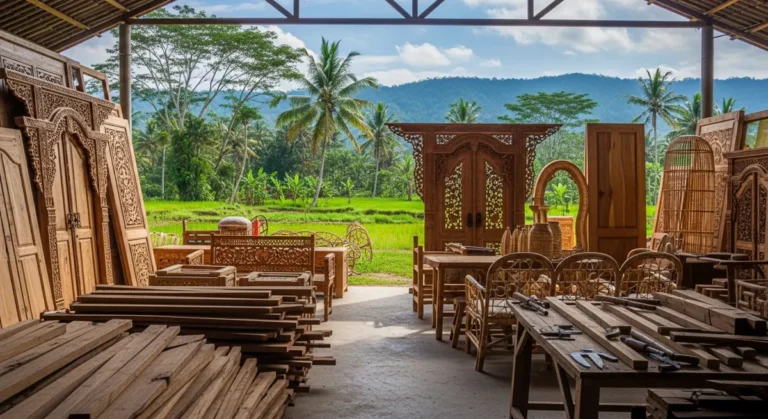
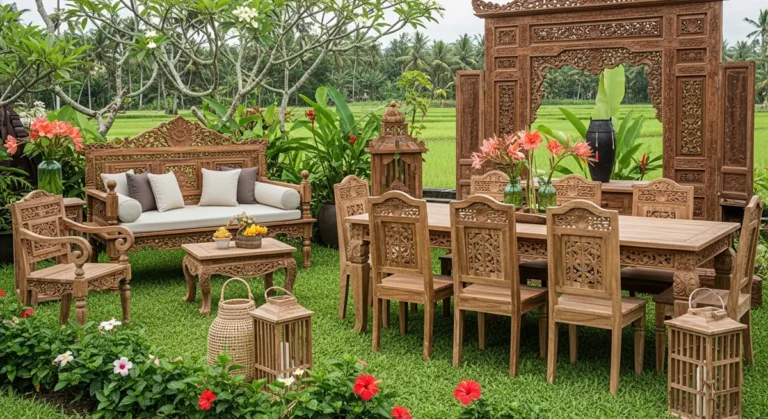
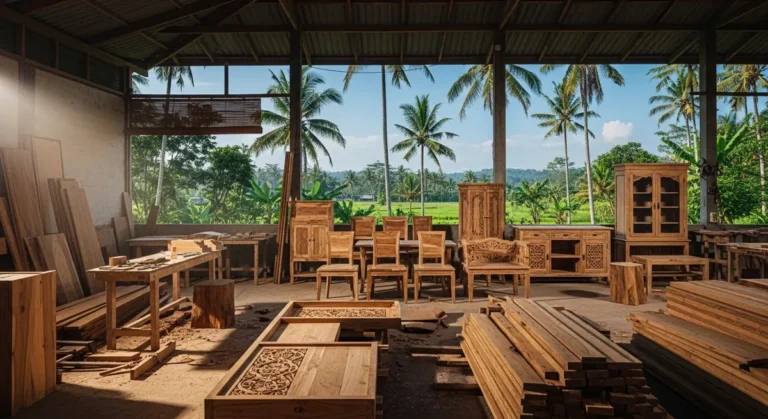
Indonesian furniture is renowned for its use of diverse and high-quality materials. Commonly used woods include solid teak, reclaimed or recycled teak from Jepara, mahogany, and suar/acacia for live-edge designs. Additionally, natural rattan, synthetic or PE all-weather rattan, water hyacinth, and seagrass are popular for woven pieces, while genuine leather and stone/terrazzo tops are used for more luxurious items. Each material offers unique benefits and aesthetic qualities, making Indonesian furniture versatile and appealing for various markets. Jepara, known as the historic hub of teak and carved furniture, remains a central point for sourcing these exquisite materials. For more insights on teak and its significance, visit Wikipedia’s page on teak. The craftsmanship in Indonesia is characterized by a blend of traditional techniques and modern designs, catering to a wide array of buyer preferences and ensuring a high level of product quality.
Container Loading Capacities and Considerations
Understanding container loading capacities is crucial for efficient and cost-effective shipping of furniture. For Indonesian furniture exports, a 20ft container can typically hold approximately 28 CBM, a 40ft container about 58 CBM, and a 40ft High Cube (40HQ) around 68 CBM. The nature of the furniture impacts loading; bulky upholstered or woven pieces often fill the volume before reaching weight limits, while denser, knock-down items might hit weight limits first. The choice of container depends on the type and quantity of furniture being shipped. Mixed-model and mixed-material containers are a standard practice, provided each item meets its per-item MOQ and the total load meets the minimum CBM requirements. For detailed insights into our shipping process, visit our furniture export shipping process page.
Minimum Order Quantities (MOQ) and Order Flexibility
Our per-item Minimum Order Quantities (MOQ) are designed to accommodate various buyer needs while ensuring production efficiency. For solid-wood furniture, MOQs typically range from 5 to 20 pieces, while woven or rattan models usually require 10 to 30 pieces per model or color. The minimum order is generally one 20ft container, approximately 25-28 CBM. This flexibility allows buyers to mix models and materials within a single container, provided the order meets the required MOQs and minimum CBM. This approach not only maximizes shipping efficiency but also provides importers the flexibility to offer a diverse product range to their customers. For tailored solutions and specific requirements, we encourage buyers to contact us directly.
Incoterms and Export Ports in Indonesia
Our furniture exports are primarily governed by Incoterms, with FOB (Free on Board) being the most common. Under FOB, we handle export clearance and loading at the Indonesian port, while buyers arrange sea freight and insurance. We also offer CFR/CNF and CIF terms for added flexibility. The main seaports for furniture export are Tanjung Perak in Surabaya, Tanjung Emas in Semarang, and Benoa in Bali. These ports are strategically located to facilitate efficient shipping to our key markets in the US, EU, Australia, the Middle East, and Japan. For buyers, understanding these Incoterms is crucial for optimizing logistics and managing costs effectively. To learn more about importing furniture to Europe under EUDR, visit our dedicated page.
Lead Times and Payment Terms
Our production lead times typically range from 30 to 60 days, depending on the order size and finishing requirements. Sea-freight transit times are approximately 3-5 weeks to destinations in the US, EU, and Australia, with shorter durations to the Middle East and Asia. These timelines can vary based on route and season, so we advise buyers to confirm current schedules. Payment terms generally involve a deposit of approximately 30-50% via T/T (bank transfer) to initiate production, with the balance due against a copy of the Bill of Lading. Terms are negotiable for repeat buyers, providing flexibility and fostering long-term partnerships. For detailed discussions on specific orders, please reach out through our contact page.
Request for Quote (RFQ) and Contact Information
To ensure the best fit for your sourcing needs, we offer personalized quotes based on material, grade, specifications, finish, volume, and Incoterm preferences. We invite you to submit a Request for Quote (RFQ) to receive a tailored proposal. For further inquiries or to discuss your specific requirements, please contact us via WhatsApp at +62 811-3941-4563 or email at [email protected]. You can also visit our contact page to start the RFQ process and explore how we can meet your furniture sourcing needs.